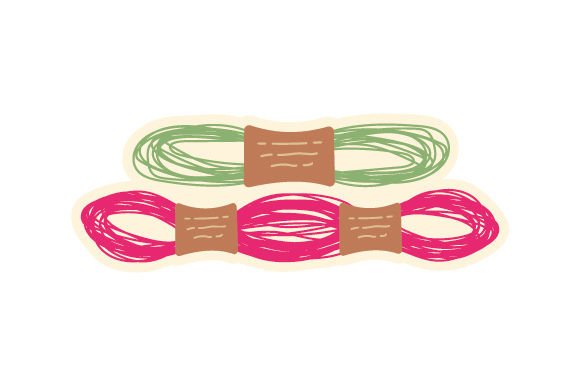
Embroidery Thread: A Designer’s Review for Branding
As an embroidery designer who has spent years digitizing logos for everything from local coffee shops to national retail chains, I approach every new asset with a critical eye. When I first encountered Embroidery Thread, my immediate reaction was not just about the aesthetic appeal, but its potential utility in a commercial setting. In the world of Hobbies and Crafts, there is often a blur between decorative fun and professional application. However, for small business owners, the distinction is vital. This review evaluates how this specific design asset performs when translated into tangible branded merchandise.
First Impressions: Visual Personality and Professionalism
The title Embroidery Thread suggests a focus on the fundamental material of our trade, which immediately sets a tone of authenticity. Visually, the design feels both modern and classic. It does not scream for attention with chaotic details; instead, it offers a clean, streamlined look that translates well to various industries. For a boutique bakery or a floral studio, this design exudes a handmade, premium quality. For a tech startup or a creative agency, it reads as minimalist and elegant.
What stands out most is the versatility. It avoids being overly rustic or excessively playful, striking a balance that allows it to sit comfortably on high-end apparel without looking out of place. This neutrality is a strength for brand identity. It allows the business’s color palette to take center stage while the design provides structural recognition. Whether you are aiming for a bold statement or a subtle nod to craftsmanship, this asset adapts.
Real-World Application for Small Business Merch
Let’s move beyond theory and discuss where this design actually works in a production environment. I have tested similar assets on various substrates, and here is how Embroidery Thread holds up in real business scenarios.
- Staff Uniforms and Aprons: For cafes and restaurants, durability is key. This design works exceptionally well on heavy cotton aprons. The lines are distinct enough to remain legible after multiple industrial washes, provided the stitch density is managed correctly.
- Custom Apparel and Caps: On structured caps, space is limited. This design fits well on the front panel without requiring excessive underlay that might cause puckering. For work shirts, it serves as an excellent chest logo accent, offering professional visibility without overwhelming the garment.
- Tote Bags and Packaging: Canvas tote bags are a staple for eco-friendly brands. The design’s clarity ensures it pops against the textured fabric. It also makes for a striking printable mockup element when presenting concepts to clients who want to visualize their branding before committing to production.
- Embroidered Patches: This is perhaps the strongest use case. As a standalone embroidered patch, the design maintains its integrity even at smaller sizes. It can be sewn onto denim jackets, laptop bags, or used as a seal on product packaging, adding a tactile layer of value to the customer experience.
Technical Considerations for Production
While the visual appeal is strong, any experienced embroiderer knows that a pretty picture does not always equal a stable stitch file. Here are the technical nuances you must consider before running this through your machine.
First, check the stitch density. If the design includes fine details or tight curves, you may need to adjust the density to prevent thread breaks or fabric distortion. Always test on a scrap piece of the actual fabric you intend to use. Fabric texture plays a massive role; a smooth polyester will behave differently than a rough linen or a stretchy jersey.
Second, consider the hoop size. Ensure the design fits within your standard hoop dimensions without requiring re-hooping, which can lead to misalignment. For small business merch, efficiency is profit. A design that requires complex setup time reduces your margin.
Third, pay attention to thread colors. While the digital file may show vibrant hues, always test contrast. On dark uniforms, ensure there is sufficient brightness in the thread choice to maintain legibility. A common mistake is choosing threads that blend too closely with the background fabric, rendering the brand invisible from a distance.
Strategic Placement and Cautionary Notes
Not every surface is suitable for every design. While Embroidery Thread is versatile, there are areas where caution is advised. Avoid using this design on items with highly irregular surfaces or extreme curvature unless you have advanced stabilizing techniques. Tiny lettering, if part of the design variant, should be scrutinized. If the text is below 0.25 inches, it may become illegible once stitched, turning into a blob of thread rather than a readable brand mark.
Additionally, be mindful of items that undergo frequent, harsh washing. While embroidery is durable, high-friction areas like collar tips or cuff edges may wear faster. Position the design in low-friction zones, such as the upper left chest or the center back of a jacket, to extend the lifespan of the finished product.
Enhancing Brand Identity and Customer Trust
Why does this matter for your bottom line? Because consistency builds trust. When a customer receives a tote bag or wears a cap with a cleanly executed logo, it signals professionalism. It tells them that you care about the details. In the competitive landscape of Etsy sellers and handmade brands, these small touches differentiate you from mass-produced competitors.
Using a cohesive design asset like Embroidery Thread across your product line creates visual consistency. Whether it is on a product label, a thank-you card insert, or the merchandise itself, the repeated visual cue reinforces brand recognition. It transforms a simple transaction into a brand experience.
Practical Designer Notes for Implementation
- Test in Black and White First: Before selecting your final thread colors, stitch the design in black thread on white fabric. This reveals any issues with spacing or detail clarity that color might hide.
- Verify File Formats: You will receive this design in SVG File, Transparent PNG, EPS, and DXF formats. Note that these are primarily vector and image formats. For machine embroidery, you will likely need to digitize these files into a native embroidery format (such as PES, DST, or JEF) using specialized software, or ensure your service provider can convert them accurately. Do not assume these files are ready-to-stitch embroidery files without checking the specific technical requirements of your machine.
- Use Proper Stabilizer: Match your stabilizer to your fabric. Cut-away for stretchy knits, tear-away for stable wovens. This prevents distortion and ensures the design lies flat.
- Create a Mockup: Use the Transparent PNG to create a digital mockup for client approval. This saves time and material costs by ensuring the client loves the placement and scale before you stitch a single thread.
- Confirm Commercial Licensing: Before using this design for commercial embroidery projects, verify the license terms. Ensure you have the right to sell products featuring this design to avoid legal issues down the line.
In conclusion, Embroidery Thread is a robust asset for any small business looking to elevate its branded merchandise. It balances aesthetic appeal with practical applicability, making it suitable for a wide range of products from caps to tote bags. By paying attention to technical details like stitch density, fabric texture, and proper file conversion, you can leverage this design to create high-quality, professional products that enhance your brand identity and delight your customers.